
At CUNY-IIE, educators, researchers and community members learn with immigrant communities, center our shared humanity, and advocate for equitable educational opportunities for all.
About Us



CUNY-IIE Vision
Communities and schools are shaped and strengthened by the migration of people and ideas across the globe. The City University of New York - Initiative on Immigration and Education (CUNY-IIE, pronounced 'CUE-knee eye') aims to develop multimodal resources that center the strengths of immigrant communities that include undocumented, refugee, and asylum-seeking members. At CUNY-IIE, educators, researchers, and local leaders work together to learn about, from, and with immigrant communities, act in ways that center our shared humanity regardless of legal status, and advocate for equitable educational policies for all, regardless of immigration status.
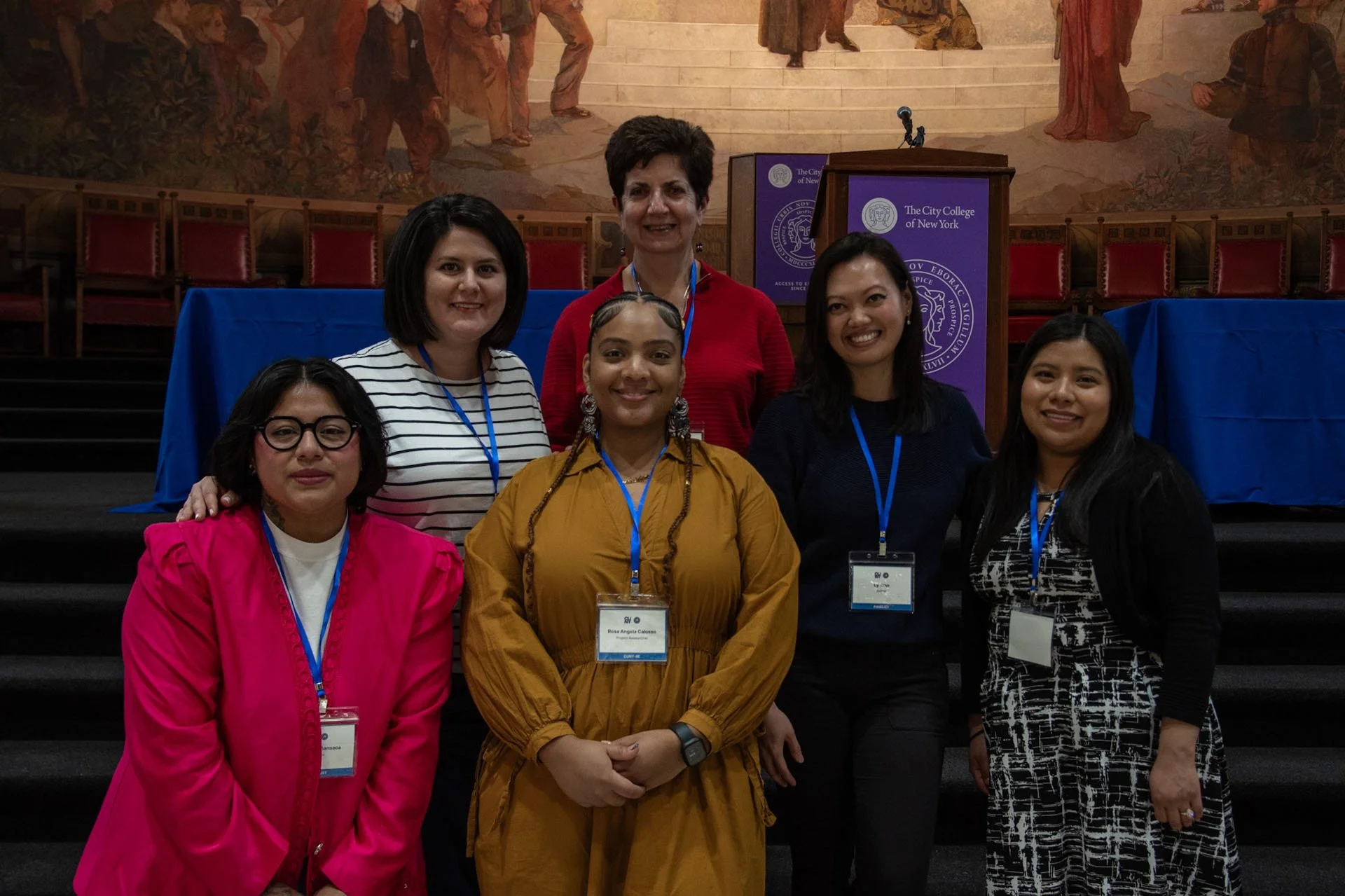
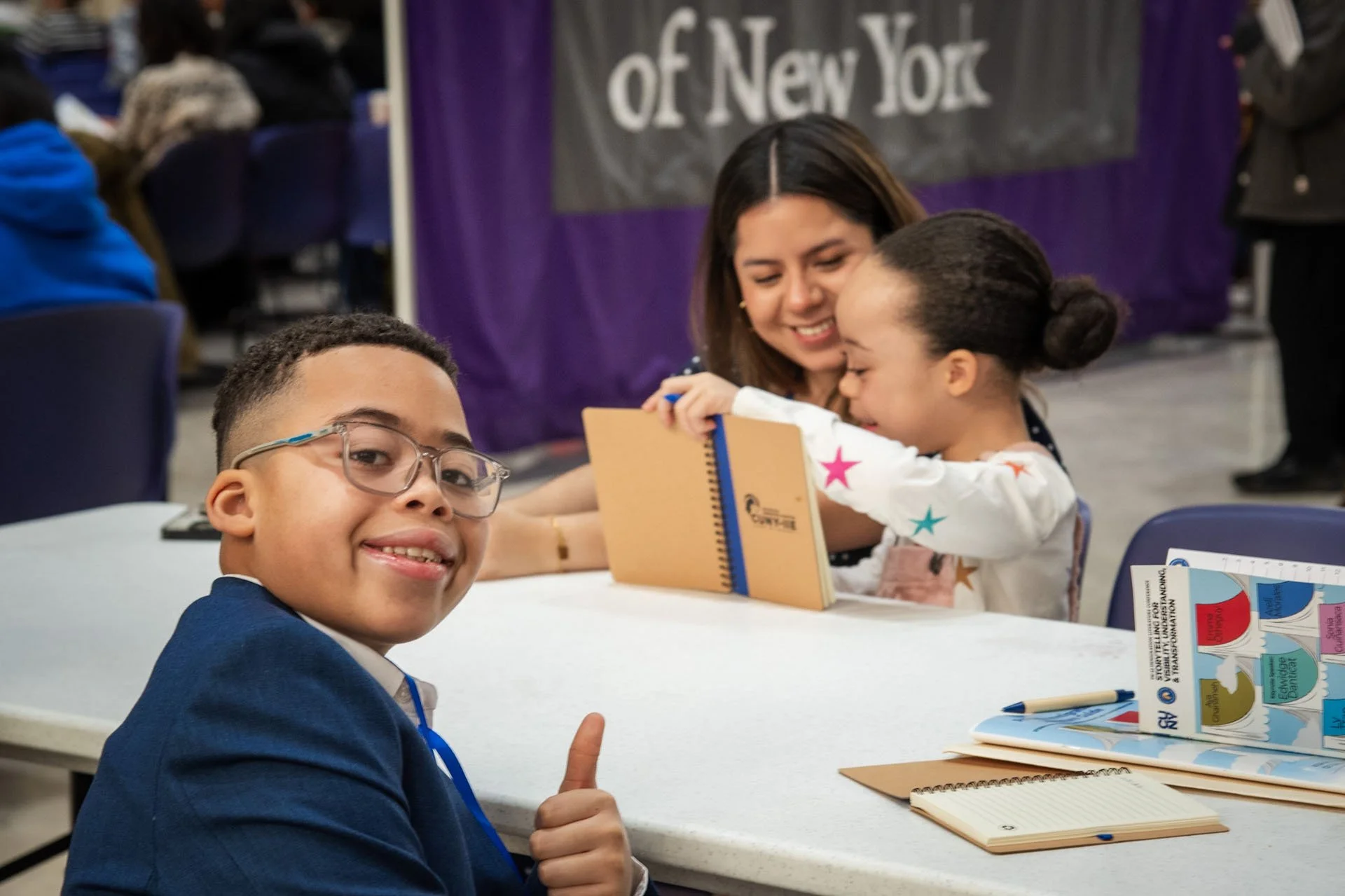
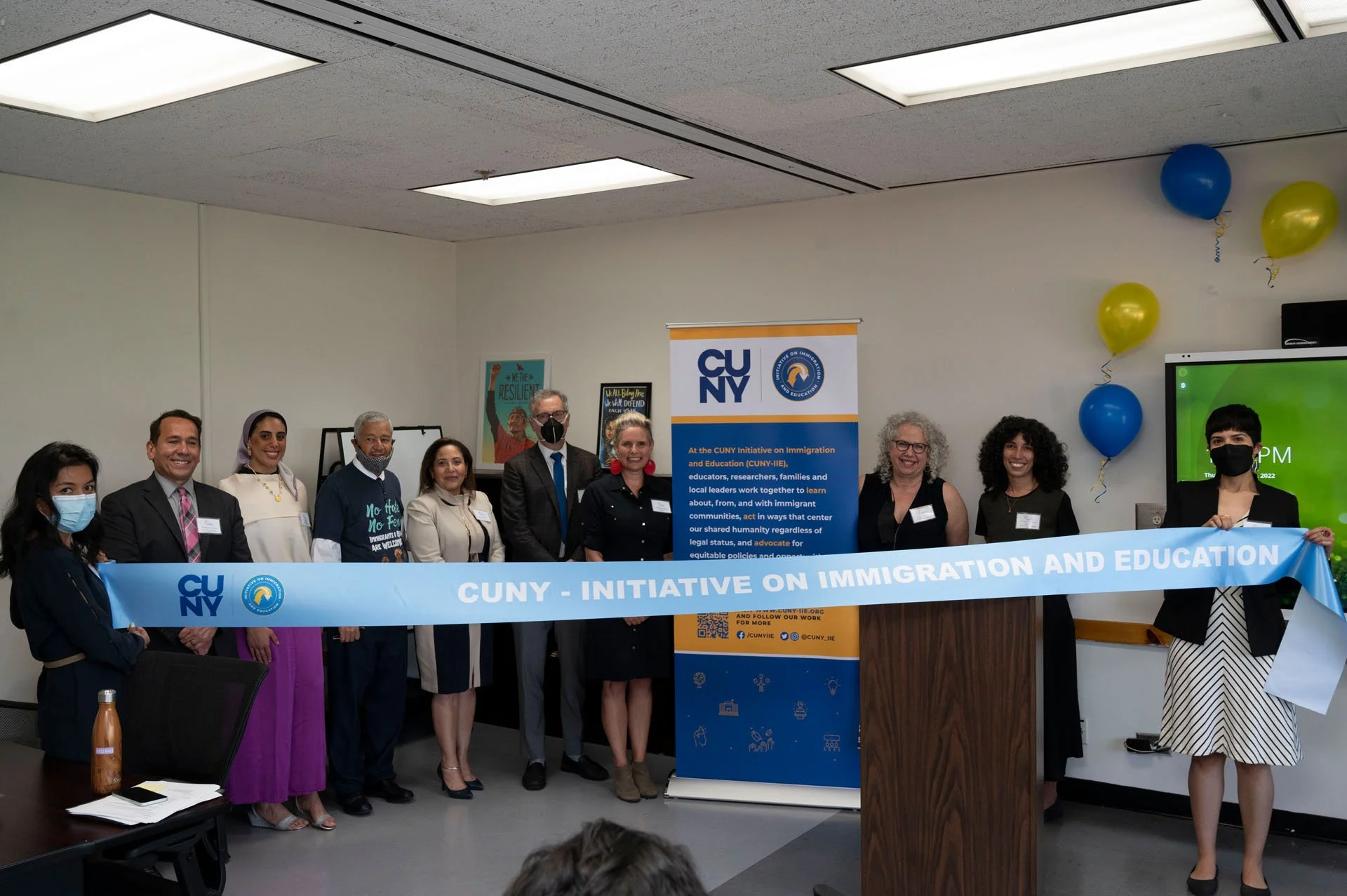
CUNY-IIE is a project funded by the New York State Education Department, and it collaborates closely with the Office of Bilingual Education and World Languages.
Since its inception in January 2020, CUNY-IIE has been working to improve the education of immigrant students by developing sustained collaborations and providing support to key stakeholders, including educators—such as teachers, counselors, school leaders, and family liaisons —students, and families.
Our Grounding Principles
Authored by
Cynthia Nayeli Carvajal, Ph.D.
As part of our goals to act and advocate, these principles address stances that educators can take as we all strive to center our shared humanity and build toward equitable policies and educational opportunities for all.
Click below to download a PDF in each respective language.
-
CUNY-IIE stands in solidarity with all those fighting for equality and justice in the Black Lives Matter movement. It is therefore important to approach this work with that sense of solidarity in mind. Although Black immigrants make up the smallest percentage of immigrants in the United States, they are more likely to be targeted for deportation. By centering the lives and experiences of those who are most vulnerable, we can advocate for equality for everyone.
-
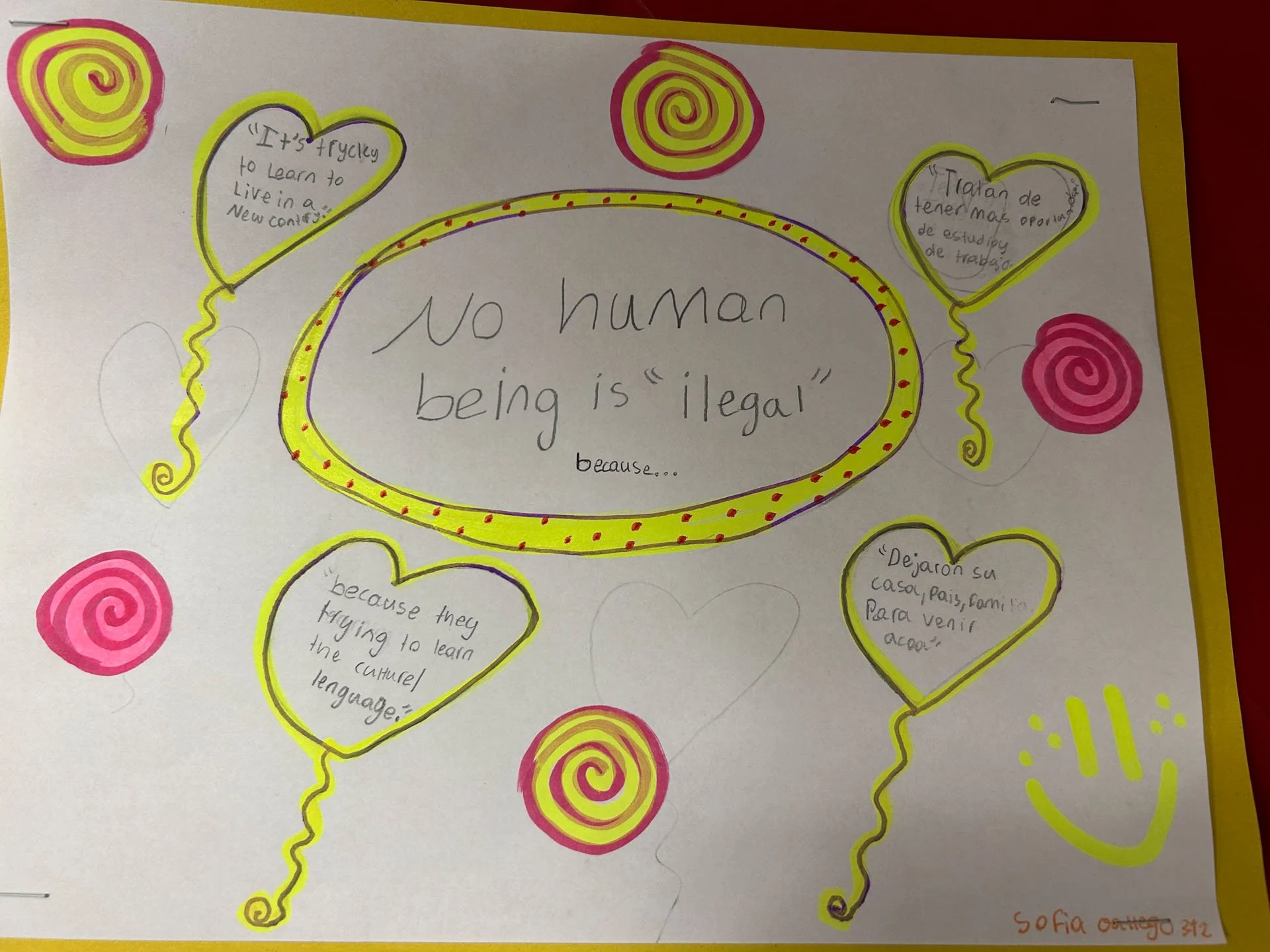
We believe that no person should be defined in terms of their immigration status, and we are opposed to the dehumanization of anyone through the use of the term ‘illegal’. This notion is further complicated by the history of colonization in the United States. New York State resides on lands stolen from Native people: Lenape, Haudenosaunee, Mohican, Abenaki, Erie, Canarsie, Rockaway, Algonquin, Merrick, Massapequas, Matinecock, Nissaquogues, Setaukets, Corchaug, Secatogue, Unkechaug, Shinnecock, Montaukett, and Mannansett.
-
The fabric of the US includes not only immigrants, but also the Native Americans whose land was stolen in the creation of this country, as well as the descendants of enslaved people who were brought to this land against their will. We refrain from statements like “we are all immigrants” and “this nation was built by immigrants,” because this further invisibilizes the Native people and lived realities of slavery and the Black experience in the United States.
-
The rhetoric on immigrant rights in the United States often centers Latinx communities, and specifically the Mexican experience. In fact, the immigrant experience in the US encompasses many countries, races, and ethnicities. As we seek to advocate for equitable opportunities for all immigrants in the New York context, it is vitally important to recognize and make space for immigrants outside the Latinx diaspora.
-
Approximately half of all multilingual learners in New York are US-born, many of whom grow up in multilingual homes and require additional support to learn English via bilingual education or English as a New Language (ENL) programs. In addition, many immigrants arrive from English-speaking countries and/or are already bilingual. Ideally, all students - and especially those who speak a home language other than English - will be given the opportunity to become bilingual and biliterate in school. It is important that we not conflate the two distinct (though overlapping) categories of students who are immigrant-origin with students who are categorized as English Language Learners.
-
Reasons for migrating to the US vary among individuals and families, but leaving one’s home, family, language and culture is often traumatic. And even though some immigrants come to the US for economic opportunity, financial issues may continue to be a challenge for new immigrants. Nevertheless, mainstream rhetoric upholds the narrative that immigrants are happier to be in the US than in their home country. This perception is reinforced by messages extolling assimilation and patriotism. However, in addition to other challenges, immigrants are often treated like second-class citizens or denied citizenship altogether; immigrants also experience violent laws and policing practices that often make the US a hostile space for immigrants.
-
Our work recognizes that the experience of migration through militarized borders can be difficult and painful. While there is a vibrant Migration is Beautiful movement often symbolized with the imagery of a butterfly, we must recognize that students’ and community members’ experiences with migration may have been traumatic. We wish to understand and recognize these experiences by incorporating mental health resources and socioemotional support in our work.
-
Anti-immigrant discourse has blamed immigrants for a broken economy, failing schools, and for overwhelmed medical resources. Research has continually shown that immigrants don’t have a negative impact on any of these services. In fact, immigrants often provide a positive impact, both socially and economically. Immigrants are vilified because xenophobia, much like racism, is a systemic issue in the US. As a result, immigrant students often have less economic mobility, attend under- resourced schools, and are provided with fewer social services.
-
We believe the home language practices of immigrant-origin students, which include different languages and varieties, are a strength that must be a part of their education. Translanguaging pedagogy, which deliberately integrates flexible language practices into education, allows for students’ voices and learning opportunities across programs, content areas and levels. All instruction should draw on students’ many linguistic resources, regardless of whether they have been labeled as English Language Learners.
-
Our work seeks to provide opportunities for educators to engage as allies, and to move from ally work to accomplice work. An ally engages in activism by standing with an individual or group in a marginalized community; an accomplice focuses on dismantling the structures that oppress that individual or group—and such work will be directed by the stakeholders in the marginalized group. As we continue to educate ourselves and others, our work seeks to develop allyship while also addressing and changing structures that impact immigrant students and communities.