
Navigating Language and Belonging at Lower East Side Preparatory School
Eye on Immigration and Education > School Feature
How one teacher builds connection, support networks, and multilingual learning spaces for newly arrived students in New York City
At Lower East Side Prep, a newcomer and transfer high school in Manhattan’s Chinatown, Katherine Li is building something that goes beyond academics. For students newly arrived to the United States—many navigating new languages, school systems, and life circumstances—her classroom has become a space of connection, expression, and community.
Now in her sixth year as an educator and in her first year at Lower East Side Prep, Katherine came in expecting to teach in Spanish and Chinese. But as the school’s population shifted—with a growing number of West African students, many from Guinea—she found herself drawing on another language: French. “I didn’t expect that to be the bridge,” she says. “But I quickly realized students could benefit from having support in that language.”
Today, she teaches across roles—French Native Language Arts, Special Education, reading intervention, and even Algebra Regents—often moving fluidly between languages to meet students where they are. “People think French is a shortcut,” she explains. “But it’s not. Students speak many other languages like Yoruba, Hausa, Malinke, Sus, Arabic, Twi and others. Students have completely different relationships to the language. You have to stay flexible.”
That flexibility is intentional. Katherine builds her classroom around translanguaging, encouraging students to use all of their languages to think, write, and communicate. “In real life, people don’t separate languages,” she says. “They move between them. Our classrooms should reflect that.” Students read multilingual texts, write poetry, and develop original work that draws on their identities. In one project, students wrote and performed their own theater pieces; in others, they share personal narratives, poems, and stories rooted in their lived experiences. “When students see their language and their stories valued, the writing changes,” she says. “It becomes more real.” The work she does embodies CUNY-IIE’s grounding principles: from “Teaching through translanguaging is central” to “The immigration experience is complicated.” She is also intentional about slowing things down. “We move too fast in schools,” she says. “They need time to sit with things—time to process, time to build trust.” For students with interrupted education or new to formal schooling, that pacing is critical.
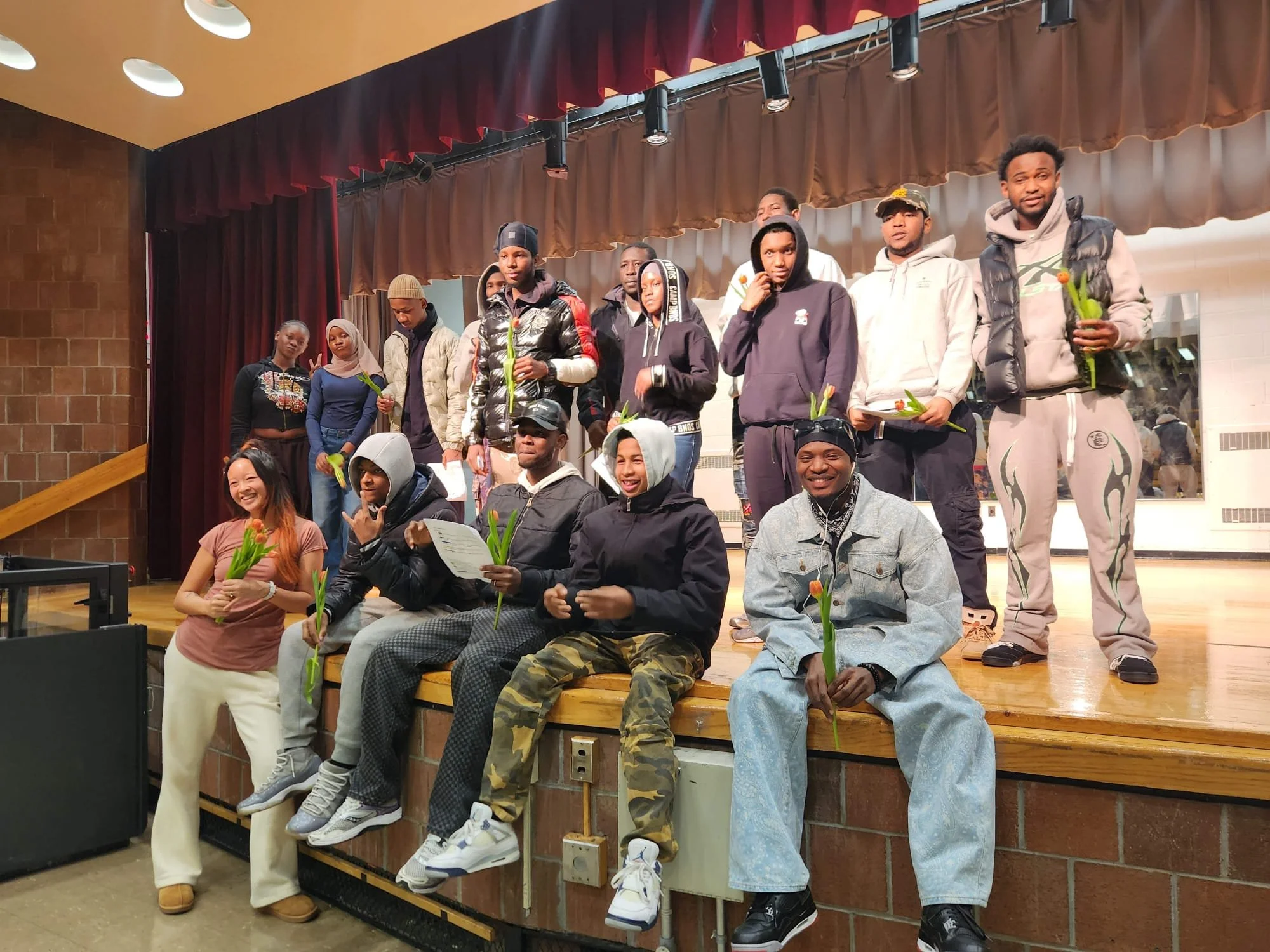
Catherine Li and her students presenting their theatre piece
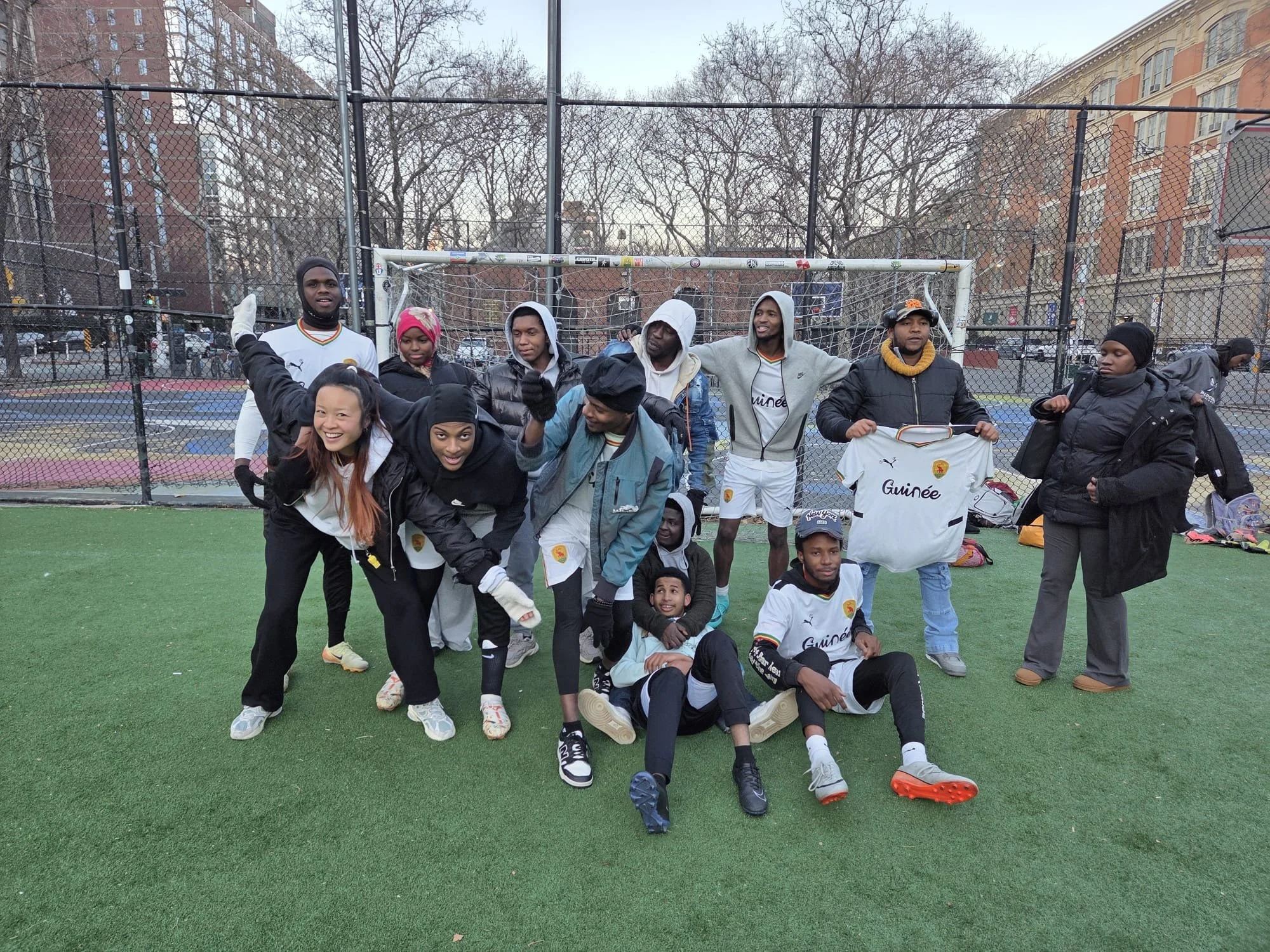
Soccer representing Guinea
A student interviewed for this feature described the difference: “We help each other. If I don’t understand, someone explains it in my language.” Katherine sees that as the goal. “Learning happens through community,” she says. “Not just from me. I’m not from the same background as many of my students,” she says. “So I have to listen. I have to stay curious. My students teach me all the time.”
That belief shapes everything. She creates space for students to support one another academically and emotionally, often encouraging them to explain concepts to peers in their shared languages. “When they teach each other, it reinforces their own learning,” she notes. Over time, that approach has grown into something larger: a student-led culture of care and collaboration. Katherine has helped nurture initiatives like an emerging African student group, where students can come together, share experiences, and build identity. “They were asking, ‘Why don’t we have this? Let’s create it,’” she recalls. “That’s when you know they feel ownership.”
For Katherine, the work goes beyond instruction—it’s about building a network of support around her students. “You cannot do this work alone,” she says. “It has to be [with] community.” She embodies this idea every day: She recently attended CUNY-IIE’s annual conference Stronger Together: Fortifying School & Community Partnerships for Immigrant Families, and there, she connected with Flanbwayan Haitian Literacy Project and immediately scheduled a visit to the organization for her students.
Connection to critical resources is an integral part of her work, from visiting community organizations to researching legal and social support. “They’re trying to survive,” she says. “Before anything else, they need to know you care.” Partnerships with local spaces like St. Mark’s Church in-the-Bowery and African Communities together have become part of that support system, offering students additional stability and connection. She has supported her students by going with them to their court appointments, but also showing them how to get to places by themselves and develop a sense of autonomy.
Mamadou Barry is one of Kat’s students. When asked about his experience, he says:
I want people to understand how hard it is to move to a new country when you don’t have a choice—leaving your family and friends, putting your life at risk because you don’t want your brothers and sisters to suffer the same situation as you.
When I came to New York, I had nothing—no clothes, no family, no house. I didn’t eat for three days and went straight to a shelter. But in my heart, nothing could destroy my dream. The next day, I went to ask about school, because in my mind, education is the key to changing my life.
I didn’t even have a phone. I had to ask someone to lend me theirs to find the school. When I got there, the language was a problem—I used Google Translate to explain what I needed. Then they told me I was too old and had to come back at 21.
When my shelter ended, I had to renew it, but it was so cold. For a week, I was sleeping on the train. Then an uncle I didn’t know I had called me. He told me to come stay with him. There were five of us in one room, but he helped me get clothes and try to find a school. He even left work to help me.
I told him I want to go to school. Education is everything for me. The biggest challenge for African students right now is getting support at home, we need to work to pay our bills - housing, food, - managing time, some of us don’t have someone who tells us what is ok and what is not. The language is also an issue. And we are stressed all the time. Ms. Kat supports us in a really good way. She speaks French, which helps us, and she makes the class feel like home. A lot of African students at LESP go there, and she always asks how we are and if anyone needs anything.
In class, she is very patient. I have some friends who struggle with math, but she makes sure they understand. The most important thing is her patience. She also encourages us to use our voice. She pushed me to join the National Honor Society and she organizes trips to African places like restaurants and associations.
Katherine recalls a visit to African Communities Together, where students were asked to share their dreams. “It was a powerful space,” she says. “Students really opened up about what they see for themselves and what’s possible.” For her, the goal is to continue learning to build a classroom where language is not a barrier but a resource, where students are connected to support systems beyond school, and where belonging comes first. “If they feel like they belong,” Katherine says, “then everything else can start to happen.”
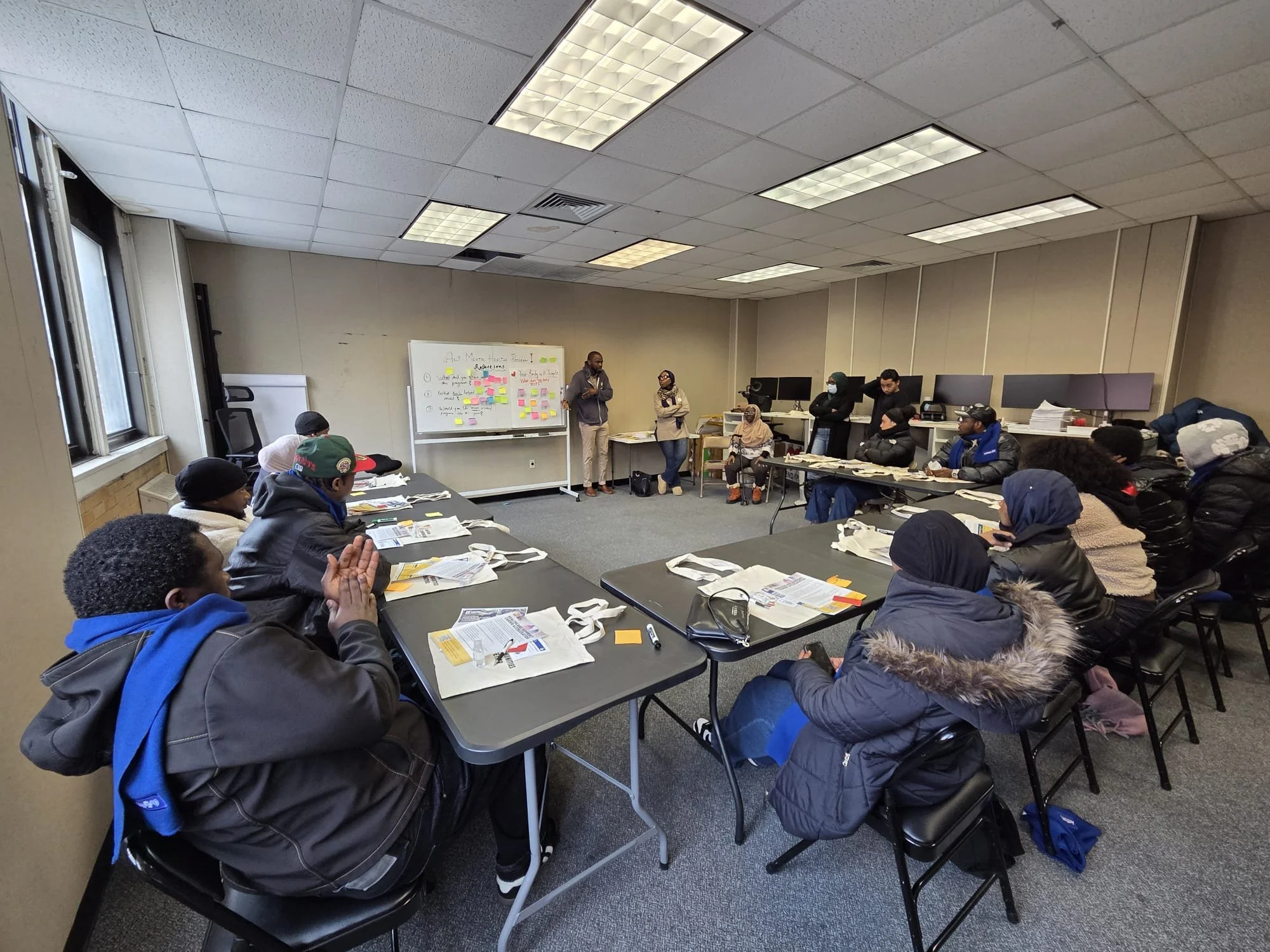
Visiting African Communities Together
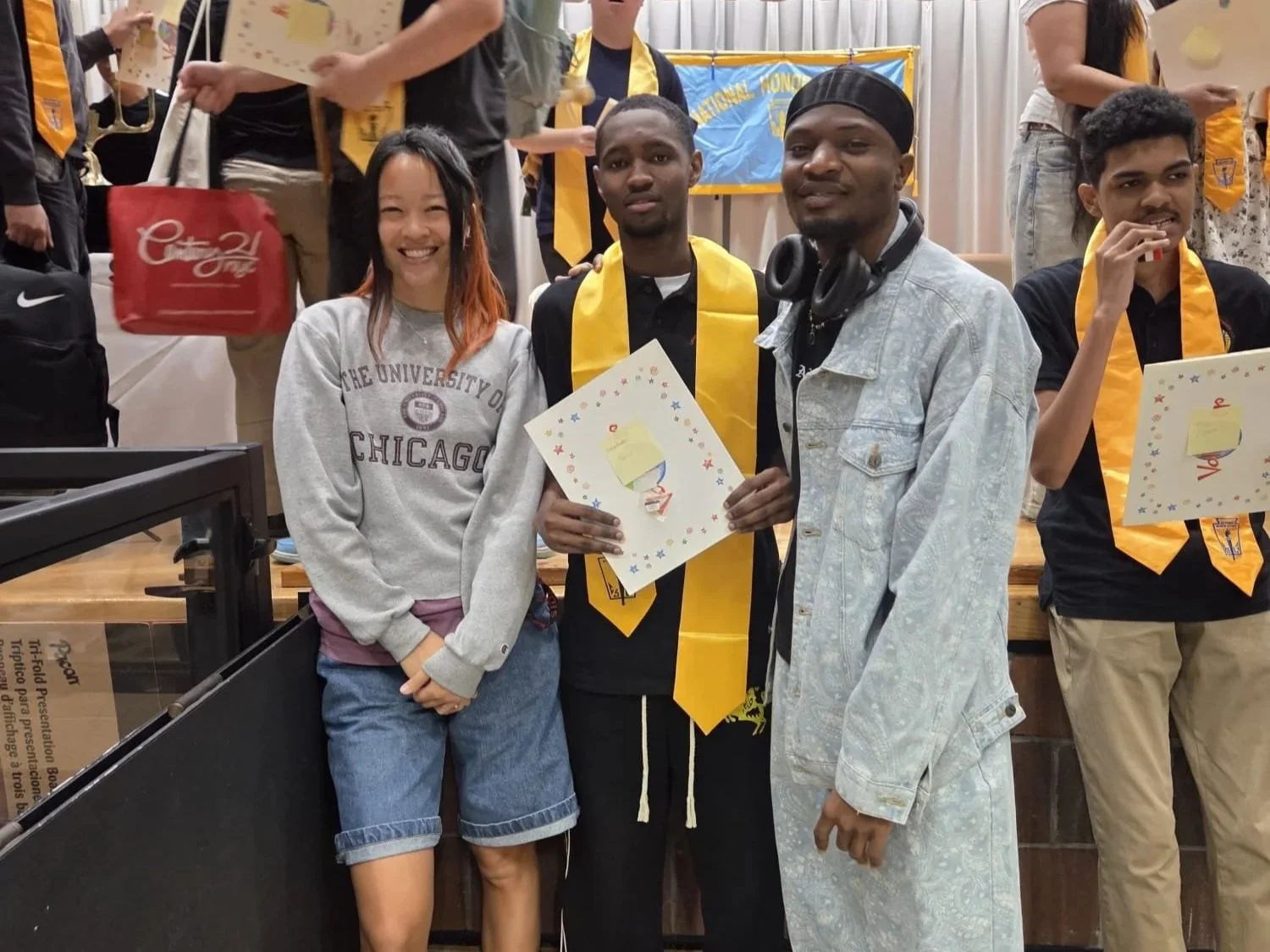
Mamadou at his National Honor Society induction
Article authored by Carmina Makar and Tamara Alsace
April 28, 2026